
Some people in distress turn to AI chatbots to talk about what they are going through. What happens when a chatbot is the only one who knows?
On July 27, 2026, NPR's All Things Considered aired "She turned to ChatGPT during a mental health crisis. Her mother shares her story," reported by Rhitu Chatterjee. It tells the story of Sophie Rottenberg, who was 29 when she died by suicide, through the words of her mother, Laura Reiley.
A months-long conversation
In the months when Sophie was struggling, she talked with ChatGPT about her suicidal thoughts. According to the story, her therapist did not know she was suicidal. Her mother later found nearly 1,800 pages of those conversations and shared them with NPR.
A new feature, and its limits
In May 2026, OpenAI added a feature called "trusted contact." A user can name a person in advance. If ChatGPT detects a risk of suicide or self-harm, it first encourages the user to reach out to that person. It also alerts OpenAI's safety team, and if the team also sees risk, the trusted contact is notified to check on the user.
Center Director Dr. Holly Wilcox spoke with NPR about the feature.
"I think it's a step in the right direction," she said, "although it's kind of a small step in the right direction."
The limitation is where much of the work still lands: on the person who is struggling, at a time when reaching out can feel hardest. What Dr. Wilcox would like to see, NPR reported, is for OpenAI and other AI companies to work proactively with existing crisis systems like 988, so a trained 988 counselor can join the conversation when a user starts talking about suicide or self-harm and help right away.
People helping people
Chatbots are available at any hour and may feel easier to talk to than someone we know. That is part of why people use them, and why the design decisions behind them matter. A crisis line is built around trained people who can listen, assess risk and connect someone to ongoing care.
Connecting the two is a design choice as much as a policy one. The goal is simple to state: when someone says they are thinking about suicide, wherever they say it, a person who can help should be able to answer.
The Center is grateful to Laura Reiley for sharing Sophie's story so that others might be safer.
Center faculty in this story
-
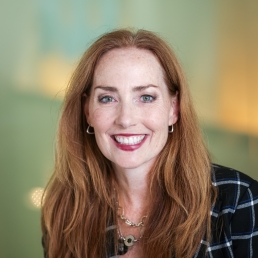 Holly C. Wilcox, PhD Director & Founder, Johns Hopkins Center for Suicide Prevention; Professor, Department of Mental Health
If you or someone you know is in crisis, call or text 988 for the Suicide & Crisis Lifeline — free, confidential, 24/7. Visit 988lifeline.org.