
"If one way is blocked, won't a person just find another?" It is one of the most common objections to protective barriers and other means-safety measures. The research gives a hopeful answer: in the settings studied, most do not.
What the research found
Center faculty Dr. Lanny Berman, Dr. Alison Athey and Dr. Paul Nestadt tested this question directly. Their study, published in Injury Prevention (Berman, Athey and Nestadt, 2022), looked at suicide deaths before and after a protective barrier was installed on a bridge.
After the barrier went up, deaths at that site fell by about 90%. Deaths at comparable nearby sites did not rise to make up the difference, and overall rates in the surrounding city also declined. Researchers call this a test of "method substitution": if people simply went elsewhere, the numbers nearby would have climbed. They did not.
A separate study, published in Injury Prevention in 2025 (doi.org/10.1136/ip-2024-045604), looked at a major U.S. bridge where a protective net was added. It reported a 73% decline in suicide deaths at that site in the 12 months after the net was completed.
Time and distance
Findings like these support a core idea in suicide prevention: putting time and distance between a person in crisis and access to lethal means. A barrier does not treat the underlying distress. What it can do is interrupt a moment of danger and create an opening for other help to reach someone, whether that is a friend, a crisis counselor or ongoing care.
The same principle guides other means-safety work the Center supports, from safer storage of firearms and medications at home to counseling families in health care settings.
From evidence to decisions
This research is now part of public conversations about new barriers. In July 2026, Dr. Nestadt spoke with Voice of San Diego reporter Raquel Torres Rodríguez about a long-planned protective barrier on a California bridge, where construction is scheduled to begin in October 2026. He pointed to the evidence that people deterred by a permanent barrier do not simply go elsewhere.
Decisions like these take time, money and public support, and they rarely rest on a single study. They depend on researchers, clinicians and community members who can explain what the evidence shows.
Limits
Each study looks at specific sites and time periods, and results may not apply in the same way everywhere. Barriers are one part of prevention, alongside crisis services, treatment and follow-up care. But the evidence is consistent with a simple, hopeful message: making lethal means harder to reach can save lives.
Hot spot bridges are left unnamed, in accordance with responsible suicide reporting guidelines.
Center faculty in this story
-
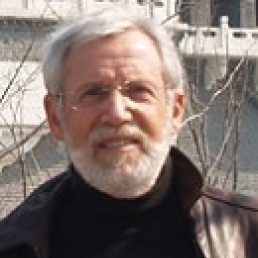 Alan L. "Lanny" Berman, PhD
 -
 Alison Athey, PhD
 -
 Paul S. Nestadt, MD Medical Director, Johns Hopkins Center for Suicide Prevention; Associate Professor, Departments of Psychiatry and Mental Health
If you or someone you know is in crisis, call or text 988 for the Suicide & Crisis Lifeline — free, confidential, 24/7. Visit 988lifeline.org.