
Mental health screening invites students to complete a short survey about how they are doing, so that those who might benefit can be offered a referral to care. Many colleges now use screening programs. One of them is the Interactive Screening Program (ISP), managed by the American Foundation for Suicide Prevention (AFSP) and used at many colleges and universities.
What sets the ISP apart is what happens after the survey. Students can exchange written messages with a mental health professional, who can offer initial support and encourage them to connect with services when that would help.
Dr. James Aluri, a member of the Johns Hopkins Center for Suicide Prevention, has been part of a team studying the ISP. In a recent reflection, he shared what the research shows about who the program reaches.
Who takes part
In "Sociodemographic and mental health characteristics associated with participating in a digital mental health screening platform on college campuses," published in the Journal of American College Health (Aluri et al., 2026), the team compared 2,817 students who used the ISP with 17,880 students surveyed through the Healthy Minds Study, across 10 campuses from 2016 to 2022. Co-authors include Ashley Witmer and Center Director Dr. Holly Wilcox.
Participation was not even. Female students were more likely to take part than male students (about 1.9 times the odds). Students with elevated depression symptoms stood out most: they had much higher odds of participating (an adjusted odds ratio of 5.74).
Who asks for help
A companion study led by Ashley Witmer, "Higher-risk psychiatric and sociodemographic characteristics predicting referral-seeking among college students using the interactive screening program" (Journal of Affective Disorders, 2026), used natural language processing to analyze student–counselor exchanges. It found that students with more serious needs, including moderate or more severe depression symptoms, were more likely to ask for a referral.
What it means
Together, the findings suggest the program is reaching many students who are struggling. They also show that some groups are less likely to take part, which is a reason to keep asking how screening can reach more students.
Dr. Aluri adds a clinician's view. In his own practice, he has seen students in distress who were referred through the ISP and benefited from care. At a time when students can talk with artificial intelligence tools at any hour, he notes, the ISP offers a sincere conversation with a trained, empathetic mental health professional.
"This program won't help every student," he writes, "but it makes a meaningful difference for some."
Limits and disclosure
These studies show associations, not causes, and include only campuses and students in the data available. The analysis of the ISP was funded by AFSP, which also provided the data; according to the authors, the Foundation had no role in conducting or interpreting the analyses.
Center faculty in this story
-
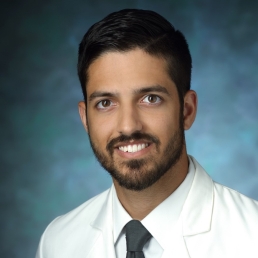 James Aluri, MD Assistant Professor
 -
 Ashley Witmer, MPH Doctoral Student
 -
 Holly C. Wilcox, PhD Director & Founder, Johns Hopkins Center for Suicide Prevention; Professor, Department of Mental Health
If you or someone you know is in crisis, call or text 988 for the Suicide & Crisis Lifeline — free, confidential, 24/7. Visit 988lifeline.org.