
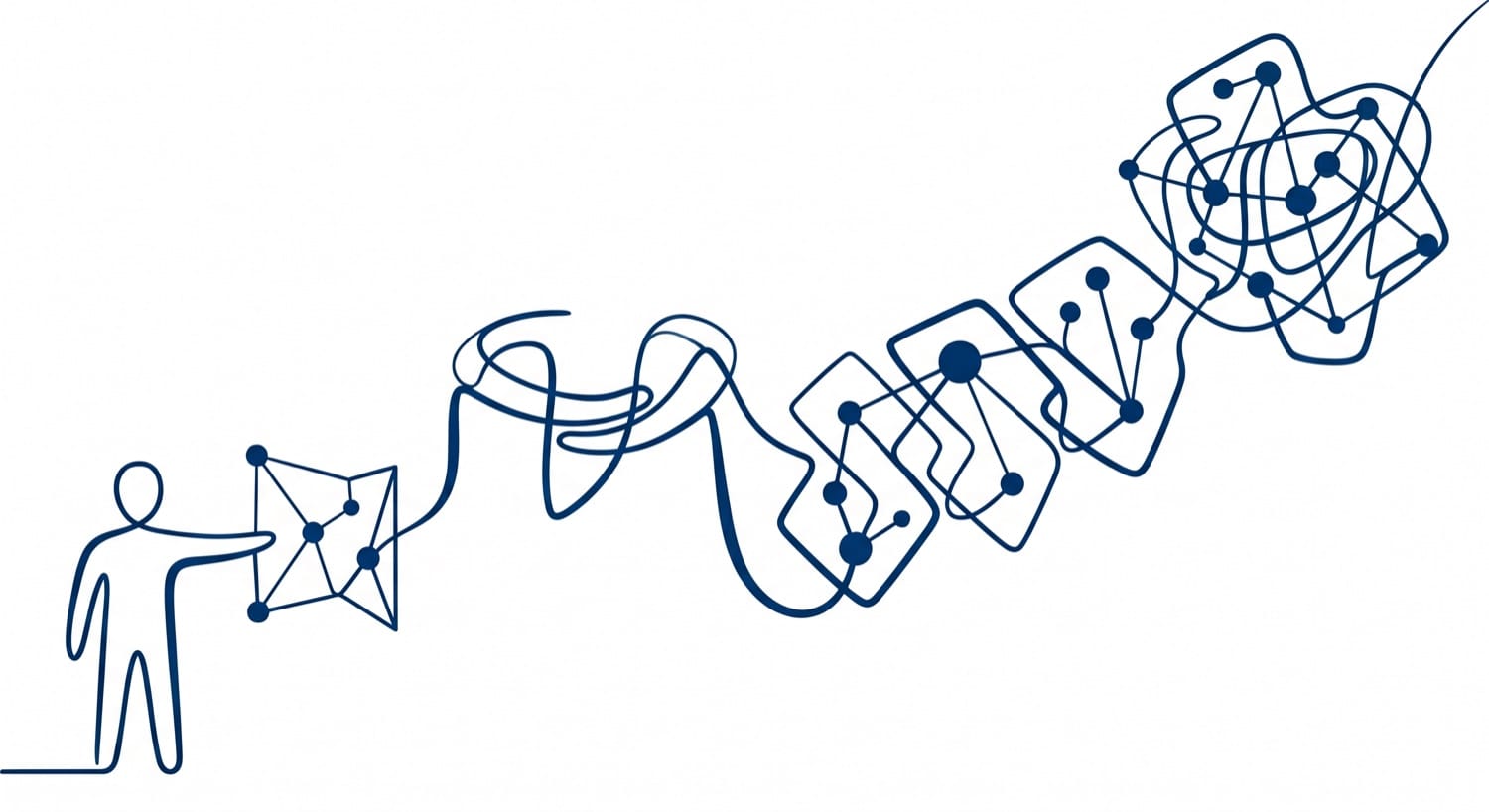
Many people who are at risk of suicide come into contact with some part of the health or social service system. What happens next is often less clear. A person may be screened but never connected to treatment, or start care and lose touch after a crisis passes.
To make those gaps visible, a team of Johns Hopkins Center for Suicide Prevention faculty developed "A Cascade of Care Model for Suicide Prevention," published in the American Journal of Preventive Medicine (Haroz et al., 2023). The authors include Center faculty Emily Haroz, Paul Nestadt, Alison Athey, Kiara Álvarez, Eric Slade, Mary Cwik, Lanny Berman and Holly Wilcox.
What a cascade of care is
"Cascade of care" models are already used in areas like HIV and opioid use disorder. They lay out the steps a person needs to move through to get the full benefit of care, and they show how many people make it to each step. When a large share of people drop off between two stages, that is where a system can focus its effort.
The Center's model organizes suicide prevention into five stages:
- Identification and characterization of risk — recognizing who may be at risk and understanding their needs.
- Immediate intervention — responding in the moment to keep someone safe.
- Linkages to care — making sure people are connected to ongoing services.
- Secondary prevention, tertiary prevention, postvention and treatment — providing care that reduces future risk, and supporting families and communities after a loss.
- Recovery and resilience — helping people build lives with meaning and connection.
The model is drawn as a cycle rather than a straight line, reflecting that people may move through stages more than once.
Why a shared map helps
A model like this gives health systems, public health agencies and community organizations a common way to describe their work and to measure it. It can help answer practical questions: How many people who screen positive are assessed? How many who are assessed are connected to care? Where are the biggest drop-offs, and for whom?
The model is a framework, not a study of outcomes. Its usefulness depends on whether systems collect the data needed to track each stage, which is itself a gap the Center's work continues to address.
The cascade reflects a core idea in the Center's approach: preventing suicide takes a connected system, not a single program.
Center faculty in this story
-
 Emily E. Haroz, PhD Deputy Director, Johns Hopkins Center for Suicide Prevention; Associate Professor, Department of International Health
 -
 Paul S. Nestadt, MD Medical Director, Johns Hopkins Center for Suicide Prevention; Associate Professor, Departments of Psychiatry and Mental Health
 -
 Alison Athey, PhD
 -
 Kiara Álvarez, PhD Bloomberg Associate Professor of American Health, Department of Health, Behavior and Society
 -
 Eric Slade, PhD Professor
 -
 Mary F. Cwik, PhD Senior Scientist, Department of International Health, Center for Indigenous Health
 -
 Alan L. "Lanny" Berman, PhD
 -
 Holly C. Wilcox, PhD Director & Founder, Johns Hopkins Center for Suicide Prevention; Professor, Department of Mental Health
If you or someone you know is in crisis, call or text 988 for the Suicide & Crisis Lifeline — free, confidential, 24/7. Visit 988lifeline.org.