
For many college students, the first conversation about their mental health now happens in writing. In the American Foundation for Suicide Prevention's Interactive Screening Program (ISP), students complete an online screening survey and can then exchange messages with a counselor, who may encourage them to connect with care. How a counselor writes back may shape whether a student takes that next step.
A new study led by Susanna Lewis, who served as a responding clinician at the Johns Hopkins Counseling Center, looked closely at those exchanges. "Relationships between counselor statements and student connection to mental health care: A cross-sectional analysis of digital screening platform conversations" was published in the Journal of American College Health (Lewis et al., 2026). Co-authors include Center PhD student Ashley Witmer, Center Director Dr. Holly Wilcox and Dr. James Aluri.
The study is part of a national evaluation of the ISP in which the Center's team has been involved.
How the study worked
The team used text analysis to classify the kinds of statements counselors made in their written conversations with students at 58 U.S. colleges and universities, using data from 2009 to 2024. They then looked at which kinds of statements were linked to students requesting a referral to mental health care.
What they found
Some kinds of counselor language were linked to students being more likely to ask for a referral:
- informing statements, such as clear information about services and next steps,
- emotional reactions, where the counselor visibly responded to what the student shared, and
- longer conversations.
Other kinds were linked to students being less likely to ask for a referral:
- interpretations of what the student was experiencing,
- explorations, or questions inviting the student to say more, and
- normalizing statements.
What it means
Text-based outreach is becoming a common way into care. These findings suggest a practical lesson for counselors working in that format: clear information paired with visible empathy may help students connect to care.
The results do not mean that exploring or normalizing is harmful. In a short written exchange, though, these approaches may be less effective at helping a student take the next step than direct information and warmth.
Limits
This is a cross-sectional study of conversations within one program. It shows which kinds of statements were associated with referral requests, not whether a particular statement caused a student to seek help. Students who used the ISP may not reflect all students on these campuses. The outcome studied was a student's request for a referral.
Center faculty in this story
-
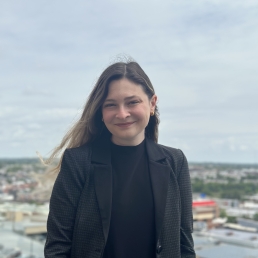 Ashley Witmer, MPH Doctoral Student
 -
 Holly C. Wilcox, PhD Director & Founder, Johns Hopkins Center for Suicide Prevention; Professor, Department of Mental Health
 -
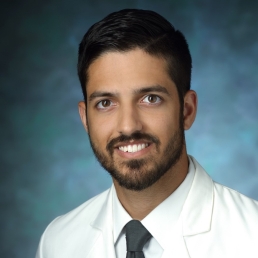 James Aluri, MD Assistant Professor
If you or someone you know is in crisis, call or text 988 for the Suicide & Crisis Lifeline — free, confidential, 24/7. Visit 988lifeline.org.