
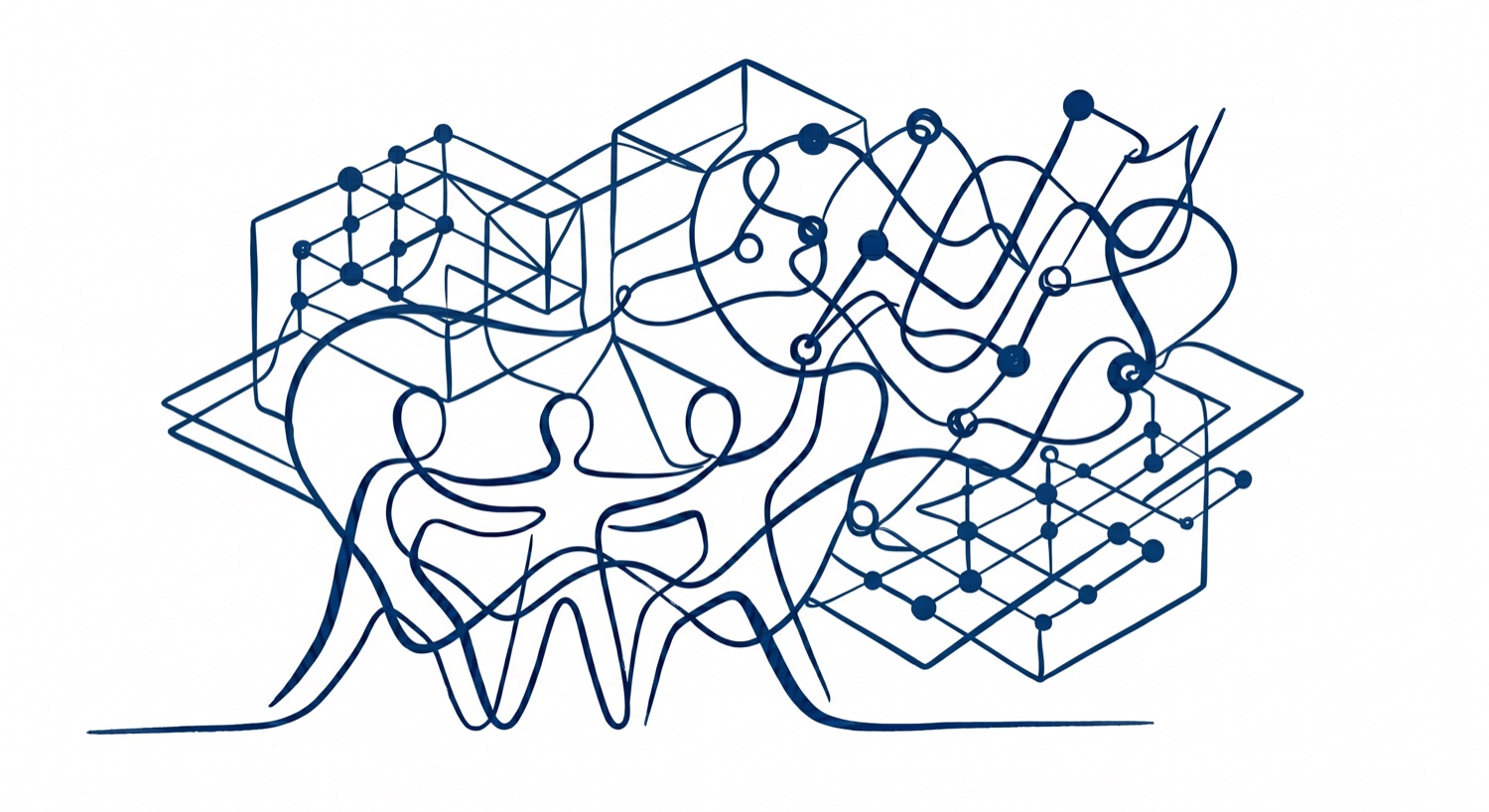
Artificial intelligence is showing up more and more in public health, including in efforts to identify people at risk of suicide. But a tool is only as fair as the data and decisions behind it. Models built without the communities they are meant to serve can carry forward the same gaps in care those communities already face.
A new paper led by Dr. Emily Haroz, Deputy Director of the Johns Hopkins Center for Suicide Prevention, offers practical guidance for doing this differently. Published in Prevention Science, "Addressing Health Disparities through Community Engagement in Artificial Intelligence-Driven Prevention Science" (Haroz et al., 2026) lays out how community members can take part at every stage of building an AI or machine-learning tool.
Six phases, one principle
The framework follows a tool through six phases: conceptualization, design, efficacy testing, effectiveness testing, dissemination and implementation, and sustainability. At each phase, the authors describe what meaningful community involvement looks like, from deciding which problem a tool should solve to deciding how it should be maintained once it is in use.
The idea is captured in a Native Hawaiian phrase the paper shares: No kākou, na kākou, "for us, by us."
Real examples, not just theory
The paper moves beyond principles to examples from three communities:
- Native-RISE, a suicide risk model developed with American Indian communities.
- Tepeyac, a chatbot project with Hispanic and Latino communities.
- KULA, a community health worker app in Native Hawaiian communities.
In the suicide prevention example, community involvement shaped a model that performed far better than the screening approach already in use. An earlier study by Dr. Haroz and colleagues in Suicide and Life-Threatening Behavior (Haroz et al., 2020) reported an accuracy score (AUC) of 0.87 for the community-informed model, compared with 0.57 for the approach used in practice at the time. A later version of the model, tested in a larger Indian Health Service population, was reported in npj Mental Health Research (Adams et al., 2024).
Why it matters
Suicide risk tools are often built on data from people who already have good access to care. Communities with less access, who may carry a heavier burden of suicide, can be underrepresented in that data. The authors argue that engaging communities from the start is one of the most concrete ways to keep AI from widening those gaps.
The paper is a framework and commentary rather than a new trial, so it does not test whether the approach works in every setting. Its value is in making the "how" specific enough for other research teams to follow and adapt.
For the Center, this work reflects a simple commitment: prevention tools should be shaped by the people they are meant to help.
Center faculty in this story
-
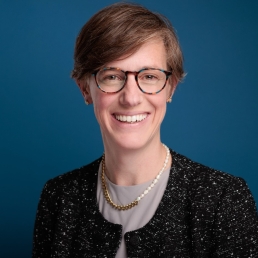 Emily E. Haroz, PhD Deputy Director, Johns Hopkins Center for Suicide Prevention; Associate Professor, Department of International Health
If you or someone you know is in crisis, call or text 988 for the Suicide & Crisis Lifeline — free, confidential, 24/7. Visit 988lifeline.org.