
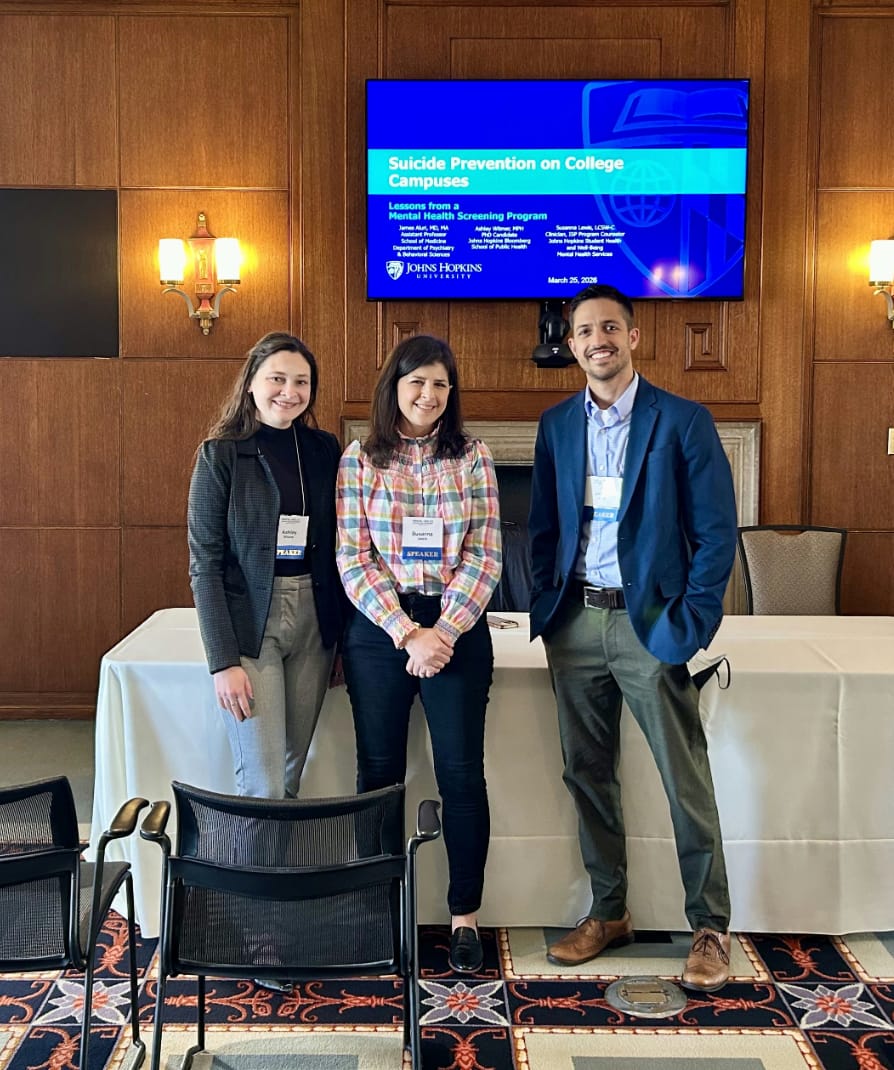
How should colleges and universities define success for their students? That question was at the center of the Mental Health on College Campuses Conference, held March 24–25, 2026, at the University of Michigan in Ann Arbor. This year's theme was "Redefining Success: Flourishing, Thriving, and Mattering in College and Beyond."
The conference brought together researchers, students, clinicians and others working to support students' well-being. The idea behind the theme is that a student's success is about more than grades and degrees. It is also about whether they are well, whether they feel they belong and whether they feel they matter.
Research from the Center
Members of the Johns Hopkins Center for Suicide Prevention community shared research on how screening can help students connect with care. Dr. James Aluri, Center Core Faculty member, Ashley Witmer, a Center PhD student, and Susanna Lewis, a clinician at the Johns Hopkins Counseling Center, presented findings from their analysis of the American Foundation for Suicide Prevention's Interactive Screening Program (ISP).
The ISP invites students to complete an online screening survey. Afterward, students can exchange written messages with a mental health professional, who can offer support and encourage them to connect with services. The team's analysis draws on ISP data from more than 50 colleges and universities. It is part of a national evaluation of the program in which the Center's team, including Center Director Dr. Holly Wilcox, has been involved.
From presentation to publication
Since the conference, the team has published findings from this work:
- A study led by Ashley Witmer in the Journal of Affective Disorders (Witmer et al., 2026) found that students with more serious needs, such as moderate or more severe depression symptoms, were more likely to ask for a referral to care, while some groups of students were less likely to ask.
- A study led by Dr. Aluri in the Journal of American College Health (Aluri et al., 2026) examined which students choose to take part in the ISP, and found that students with elevated depression symptoms were much more likely to participate.
- A study led by Susanna Lewis, also in the Journal of American College Health (Lewis et al., 2026), found that clear information and visible emotional support from counselors were linked to students asking for a referral.
Why it matters
Screening is one way colleges try to reach students before small struggles become larger ones. Research like this helps show who screening reaches, who it misses and how the conversations that follow can make it easier for students to take the next step.
Conferences like this one are also a chance to learn from students, clinicians and campus leaders, and to keep research connected to students' everyday lives.
Center faculty in this story
-
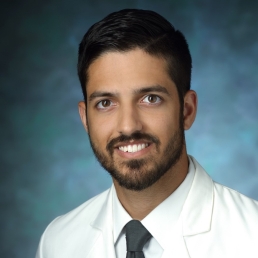 James Aluri, MD Assistant Professor
 -
 Ashley Witmer, MPH Doctoral Student
 -
 Holly C. Wilcox, PhD Director & Founder, Johns Hopkins Center for Suicide Prevention; Professor, Department of Mental Health
If you or someone you know is in crisis, call or text 988 for the Suicide & Crisis Lifeline — free, confidential, 24/7. Visit 988lifeline.org.