
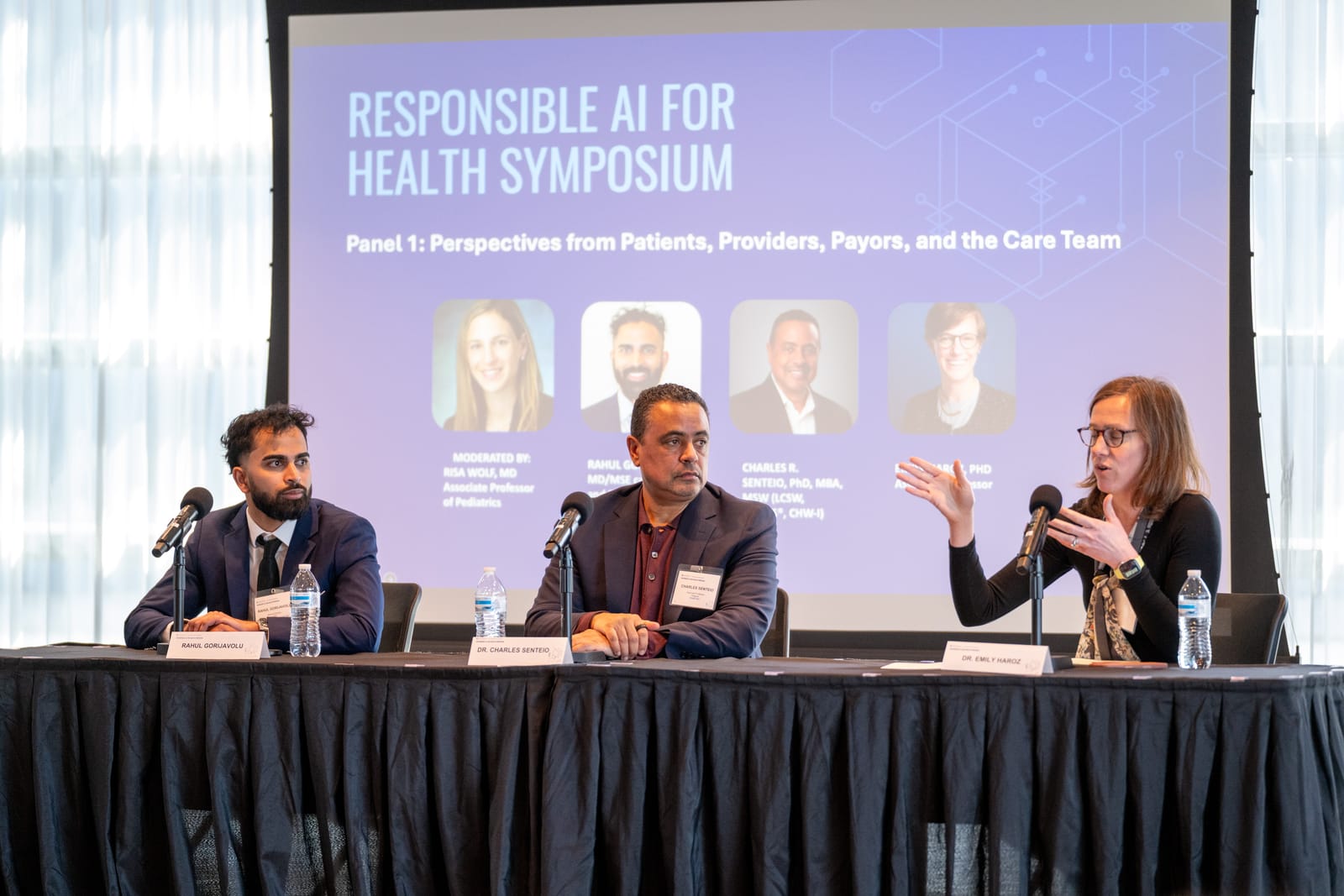
Artificial intelligence is moving quickly into health care, from tools that help clinicians spot risk to systems that shape how care is delivered. How those tools are designed, tested and governed will determine whether they help the people who need care most.
On February 24, 2026, that question brought together leaders "in policy, business, technology, medicine, and academia" in Washington, D.C., for the Responsible AI for Health Symposium (RAIHS) 2026. The symposium was hosted by the Center for Digital Health and Artificial Intelligence (CDHAI) at the Johns Hopkins Carey Business School, together with the Bloomberg School of Public Health, the Berman Institute of Bioethics, the School of Medicine and the Whiting School of Engineering, with support from a Johns Hopkins Nexus Award.
The program
Keynote speakers included Dr. Atul Gawande, Dr. David Rhew and Dr. Leo Anthony Celi. Panels explored how academia and industry can work together on responsible AI and how AI in health care is experienced by patients, providers, payers and care teams.
Dr. Emily Haroz, Deputy Director of the Johns Hopkins Center for Suicide Prevention, spoke on the panel "Perspectives from Patients, Providers, Payors, and the Care Team." She is also one of the Johns Hopkins faculty members named on the Nexus Award that supported the event.
Why a suicide prevention center is part of this conversation
AI tools are already being developed to help identify people at risk of suicide. That makes the questions raised at the symposium practical ones for the Center: Is a tool accurate for everyone it is used on? Who was involved in building it? Does it fit the way clinicians actually work?
Center faculty are studying those questions directly. A 2026 paper led by Dr. Haroz in Prevention Science, "Addressing Health Disparities through Community Engagement in Artificial Intelligence-Driven Prevention Science," lays out how communities can take part in every phase of building an AI tool, drawing on work with American Indian, Latino and Native Hawaiian communities. Another 2026 study in the American Journal of Emergency Medicine (Cohen et al.), co-authored by Center Medical Director Dr. Paul Nestadt, surveyed pediatric emergency physicians and found interest in AI support for firearm access screening, provided tools fit into clinical workflow.
Evidence first
A public health approach asks the same things of AI that it asks of any intervention: that it be tested, that it work fairly across groups, and that the people affected have a voice in how it is used. Conversations like this one help keep those standards at the center as the technology develops.
The Center is grateful to CDHAI and colleagues across Johns Hopkins for the collaboration.
Center faculty in this story
-
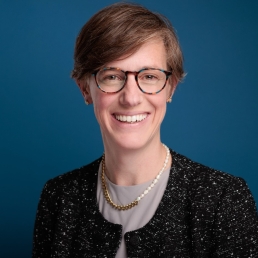 Emily E. Haroz, PhD Deputy Director, Johns Hopkins Center for Suicide Prevention; Associate Professor, Department of International Health
If you or someone you know is in crisis, call or text 988 for the Suicide & Crisis Lifeline — free, confidential, 24/7. Visit 988lifeline.org.